
Enjoy Free & Fast Delivery All Pakistan 45 Days Free Returns
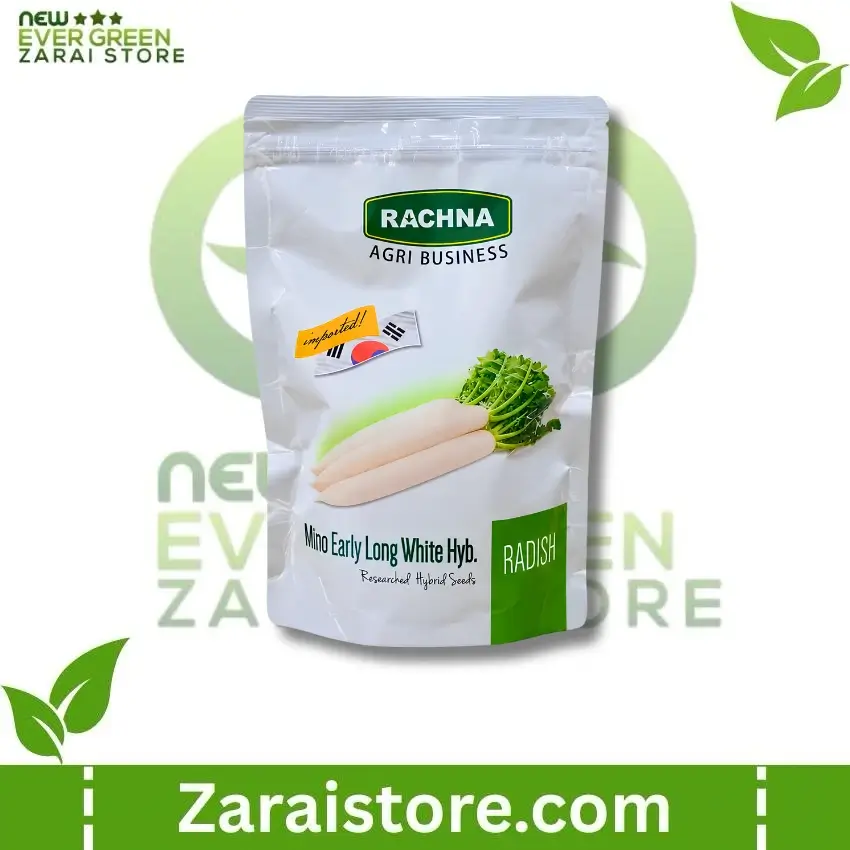
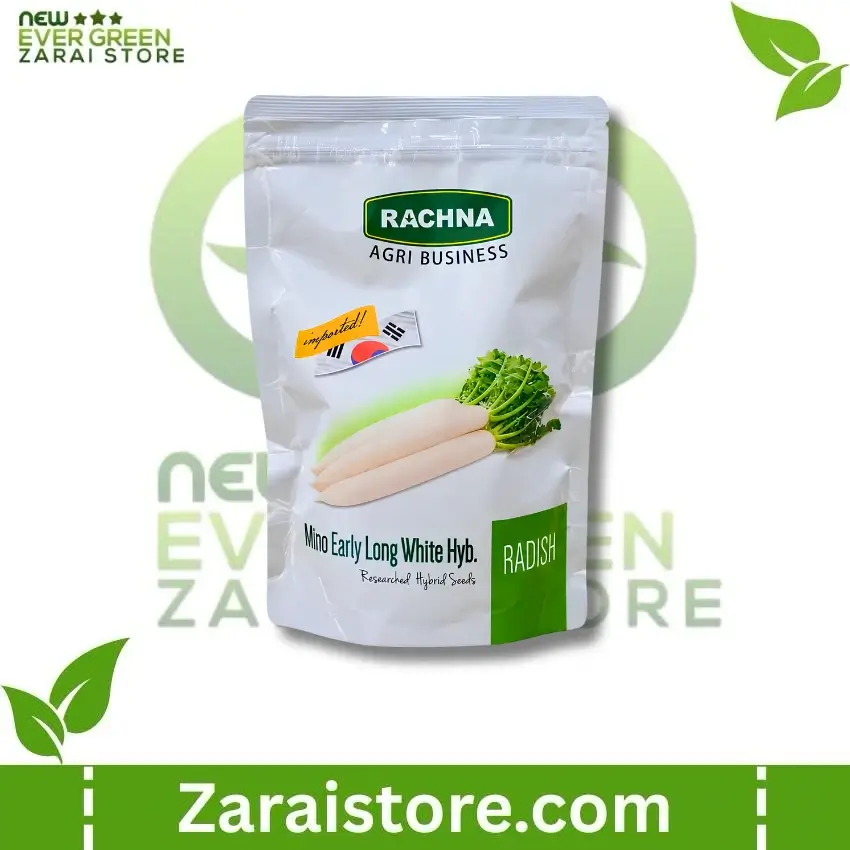
Rachna Mino Early Long White Hybrid Radish Seeds 400g Mooli Beej Pakistan
Rachna Mino Early Long White Hybrid Radish Seeds 400g
Rachna Mino Early Long White Hybrid Radish Seeds 400g by Rachna Agri Business are intended for Mooli cultivation and fresh vegetable production. These hybrid radish seeds are suitable for farmers and home gardeners planning to grow long white radish under suitable soil and seasonal conditions.
Delivery Charges in Pakistan: Free (No Charges)
Delivery Charges in Other Countries: Charges will Apply
Rachna Mino Early Long White Hybrid Radish Seeds by Rachna Agri Business are intended for Mooli cultivation and fresh vegetable production. This hybrid radish variety is suitable for farmers, commercial vegetable growers and kitchen gardening enthusiasts interested in growing long white radish.
Radish is a popular root vegetable cultivated for its edible roots. It is used in fresh salads, traditional cooking, pickles and other vegetable dishes. Successful radish cultivation requires suitable soil preparation, timely sowing, proper plant spacing, consistent moisture and balanced crop nutrition.
Mino Early Long White Hybrid Radish Seeds are supplied in a 400g packet. Farmers should follow the company's instructions for variety-specific sowing time, seed rate, maturity and harvesting.
Rachna Mino Early Long White Hybrid is a radish variety listed under Rachna Agri Business. It is intended for growing long white radish for fresh vegetable production.
The crop can be cultivated in suitable seasonal conditions with proper field preparation and crop management. Loose, fertile and well-drained soil is particularly important for straight and healthy root development.
| Specification | Details |
|---|---|
| Product Name | Rachna Mino Early Long White Hybrid Radish Seeds |
| Company | Rachna Agri Business |
| Variety | Mino Early Long White |
| Crop Name | Radish (Mooli) |
| Pack Size | 400g |
| Seed Rate | 8 packets per acre |
| Crop Category | Vegetable Crop |
| Seed Type | Hybrid Seeds |
| Package Type | Seed Packet |
| Usage | Commercial Farming and Kitchen Gardening |
Radish is a root vegetable belonging to the Brassica family. It is commonly grown for its edible roots and can be cultivated in suitable cool and mild weather conditions.
Radish is generally a short-duration vegetable crop. Proper sowing time, soil preparation and moisture management help establish a uniform crop.
Mino Early Long White is the variety name supplied for this product. It is listed as a long white hybrid radish variety by Rachna Agri Business.
For exact information about root length, average root weight, maturity period, colour, expected yield and other variety-specific characteristics, consult the official seed packet or company representative.
Suitable cool or mild growing conditions.
Loose and fertile soil.
Good field drainage.
Proper seed placement and plant spacing.
Consistent soil moisture.
Adequate sunlight.
Balanced nutrient management.
Timely weed and pest management.
Rachna Mino Early Long White Hybrid Radish Seeds.
Company: Rachna Agri Business.
Long white radish variety.
400g seed packet.
Hybrid vegetable seeds.
Supplied seed rate of 8 packets per acre.
Suitable for Mooli cultivation.
Suitable for fresh vegetable production.
Suitable for farmers and vegetable growers.
Can be cultivated in suitable seasonal conditions.
Radish is widely used in fresh vegetable markets and household cooking. It can be grown for local vegetable supply and commercial production.
Mino Early Long White is listed as a long white radish variety. Follow the company's cultivation instructions for variety-specific root development and harvesting.
The product can be considered by farmers planning radish cultivation for fresh markets, subject to local climate suitability and company recommendations.
Radish is also grown in home gardens. Gardeners can cultivate it in properly prepared garden beds or suitable containers with adequate depth for root development.
Radish is generally a short-duration vegetable crop compared with many other vegetables. Its actual maturity period depends on variety, weather and crop management.
Commercial vegetable farmers.
Radish growers.
Kitchen gardening enthusiasts.
Vegetable nursery operators.
Farmers planning Mooli production.
Fresh vegetable market suppliers.
Growers looking for long white hybrid radish seeds.
The following is a general radish cultivation guide for Pakistan. It is not an official Mino Early Long White company schedule. Sowing and harvesting dates may vary according to district, temperature, elevation and seasonal conditions.
Sowing Time: Generally September to November for autumn and winter cultivation. Spring sowing may be possible from February to March in suitable areas and conditions.
Germination Time: Approximately 4–10 days under suitable soil moisture and temperature.
Crop Growth Duration: Approximately 40–60 days from sowing for many early radish types. The exact Mino Early maturity period requires company confirmation.
Harvesting Time: Generally October to January for autumn and winter sowing, with spring crops harvested according to their planting date and maturity.
Sowing Time: Generally October to January in suitable areas as temperatures become favourable. Adjust sowing according to local weather.
Germination Time: Approximately 4–10 days under suitable conditions.
Crop Growth Duration: Approximately 40–60 days for many early radish types.
Harvesting Time: Generally during winter and early spring, depending on sowing date and crop development.
Sowing Time: Generally September to November in suitable plains and lower-elevation areas. Cooler districts may require adjustments according to local climate.
Germination Time: Approximately 4–10 days under suitable conditions.
Crop Growth Duration: Approximately 40–60 days for many early radish types.
Harvesting Time: Generally during autumn and winter, depending on the district and sowing schedule.
Sowing Time: Sowing schedules vary considerably according to elevation and district. September to November may be suitable in some areas, while colder regions require locally adjusted planting dates.
Germination Time: Approximately 4–10 days under suitable conditions.
Crop Growth Duration: Approximately 40–60 days for many early radish types.
Harvesting Time: Depends on district climate, sowing date and root maturity.
Sowing Time: Generally September to November for autumn and winter cultivation. Spring sowing may also be possible in suitable conditions.
Germination Time: Approximately 4–10 days under suitable moisture and temperature.
Crop Growth Duration: Approximately 40–60 days for many early radish types.
Harvesting Time: Generally during autumn, winter and early spring, depending on sowing date.
These are general growing estimates for radish, not confirmed maturity or regional recommendations for Rachna Mino Early Long White Hybrid. Follow the company's packet instructions for the final sowing schedule.
Healthy germination is the first step toward successful radish cultivation. Radish seeds generally germinate well in suitable soil moisture and moderate temperatures.
Use clean, healthy and properly prepared soil.
Prepare a fine seedbed before sowing.
Sow seeds at a suitable depth.
Maintain consistent soil moisture.
Avoid waterlogging.
Do not allow the seedbed to become excessively dry.
Protect newly sown seeds from heavy irrigation and soil erosion.
Monitor the field regularly until seedlings emerge.
Germination can be affected by:
Seed quality and viability.
Soil temperature.
Soil moisture.
Sowing depth.
Soil structure.
Excessive water or poor drainage.
Seed storage conditions.
The estimated germination period is 4–10 days under suitable conditions. Actual emergence may vary.
Proper soil selection is particularly important for radish because the edible portion develops underground. Soil should allow roots to grow without excessive resistance.
Loose, fertile and well-drained sandy-loam or loamy soil is generally suitable for radish cultivation.
Recommended soil conditions include:
Loose soil structure.
Good drainage.
Adequate organic matter.
Suitable soil fertility.
Proper moisture retention.
No excessive stones or hard soil layers.
Heavy and compacted soil may cause irregular root development, forked roots or difficulty during harvesting.
Good drainage helps protect young plants and developing roots from excessive moisture.
Avoid fields where water remains standing.
Prepare suitable drainage channels where necessary.
Avoid excessive irrigation.
Maintain proper field levelling.
Do not allow waterlogging around the root zone.
Proper land preparation creates a loose and uniform seedbed for radish root development.
Select a field with fertile, loose and well-drained soil. Avoid areas with excessive stones, compacted layers or standing water.
Remove weeds and previous crop residues.
Plough the field to loosen the soil.
Break large soil clods.
Remove stones and other obstructions where possible.
Incorporate well-decomposed organic matter if required.
Level the field for uniform irrigation.
Prepare suitable beds, ridges or rows according to the local sowing method.
Ensure that the topsoil is fine and suitable for direct seed placement.
Good field preparation helps improve seed placement and supports more uniform root development.
Radish is generally established through direct sowing in the main field. Seeds should be placed evenly in prepared rows or beds to support uniform plant growth.
The supplied seed rate for Rachna Mino Early Long White Hybrid Radish Seeds is 8 packets per acre.
The listed packet size is 400g. At this pack size, 8 packets equal 3.2kg of seed per acre.
Confirm this seed rate with Rachna Agri Business before large-scale sowing. The actual requirement may vary according to germination, spacing, sowing method and desired plant population.
Prepare a fine and level seedbed.
Mark rows at suitable spacing.
Sow seeds evenly in rows.
Avoid placing too many seeds in one spot.
Cover seeds lightly with fine soil.
Irrigate gently after sowing.
Monitor seedling emergence.
Thin overcrowded plants when necessary to maintain suitable spacing.
Radish seeds are generally sown shallowly. A depth of approximately 1–2cm is commonly used, depending on soil texture and moisture conditions.
Avoid deep sowing because it may delay emergence and affect seedling establishment. Follow the company packet instructions if a specific depth is provided.
Maintain suitable spacing between rows and plants to allow proper root development.
Avoid excessive plant density.
Thin seedlings where plants are overcrowded.
Maintain uniform spacing throughout the field.
Adjust spacing according to soil fertility and local cultivation practices.
Follow Rachna Agri Business recommendations for Mino Early Long White.
Maintain suitable soil moisture during germination and early crop establishment.
Keep the seedbed moist.
Avoid excessive irrigation.
Prevent the soil from becoming excessively dry.
Adjust watering according to weather and soil conditions.
Provide gentle irrigation after sowing where required.
Avoid strong water flow that may uncover or displace seeds.
Maintain moisture until germination.
Check the field regularly for dry patches.
Avoid waterlogging in the seedbed.
Early crop management helps establish a healthy and uniform radish crop.
Monitor seedling emergence regularly.
Check for uneven germination.
Maintain suitable soil moisture.
Remove weeds carefully.
Protect young seedlings from excessive heat or harsh weather.
When seedlings become established, remove excess plants where necessary.
Maintain suitable plant spacing.
Remove weak or overcrowded seedlings.
Avoid damaging the roots of neighbouring plants.
Carry out thinning carefully when the soil is slightly moist.
Weeds can compete with young radish plants for nutrients, moisture and sunlight.
Remove weeds at an early stage.
Keep rows clean.
Use shallow cultivation where appropriate.
Avoid disturbing developing roots.
Proper crop management throughout the growing period supports healthy foliage and uniform root development.
Maintain suitable plant spacing.
Provide consistent soil moisture.
Apply balanced fertilizers according to soil testing.
Control weeds before they become established.
Monitor plants for insect pests and diseases.
Avoid excessive nitrogen application.
Maintain good field drainage.
Harvest roots at the appropriate marketable stage.
Follow Rachna Agri Business recommendations for variety-specific maturity and harvesting.
Actual root size, maturity, yield and market quality depend on climate, soil conditions, seed performance and crop management.
Proper irrigation is essential for healthy radish growth, uniform root development and good vegetable quality. Radish is a relatively short-duration crop, so maintaining suitable soil moisture throughout its growing period is important.
Insufficient moisture can slow root development and affect root quality. On the other hand, excessive irrigation and waterlogging may encourage root diseases and other crop problems.
Provide light irrigation after sowing to maintain suitable soil moisture.
Use a gentle watering method to avoid disturbing seeds.
Keep the seedbed moist during germination.
Avoid excessive water that may cause seeds to move from their original position.
Check the field regularly for dry patches.
Maintain consistent moisture after seedlings emerge.
Avoid allowing young plants to experience prolonged moisture stress.
Adjust irrigation according to soil texture and weather.
Avoid standing water around young plants.
Maintain uniform soil moisture during root formation.
Avoid sudden changes between very dry and excessively wet soil.
Provide irrigation according to crop requirements.
Monitor soil moisture regularly.
Ensure proper drainage throughout the field.
Adjust irrigation according to root maturity and soil conditions.
Avoid unnecessary excessive watering near harvest.
Harvest roots at the appropriate marketable size.
Do not allow roots to remain in unsuitable soil moisture conditions for extended periods.
Avoid waterlogging.
Do not allow the soil to become excessively dry.
Maintain suitable drainage.
Use clean irrigation water.
Adjust irrigation according to temperature and soil conditions.
Balanced nutrient management supports healthy leaves, root development and uniform crop growth. Radish requires suitable nutrition throughout its growing period.
Excessive fertilizer application, particularly nitrogen, may encourage excessive leaf growth and negatively affect root development or quality.
Organic matter improves soil structure, fertility and moisture management.
Recommended practices:
Incorporate well-decomposed farmyard manure before field preparation.
Use mature compost where suitable.
Avoid fresh manure immediately before sowing.
Mix organic matter uniformly into the soil.
Maintain good soil structure for unrestricted root development.
Use organic inputs according to local agricultural recommendations.
Apply fertilizers according to soil testing and local agricultural recommendations.
Provide balanced nutrients according to crop requirements.
Nitrogen supports healthy leaf development.
Phosphorus contributes to root establishment and early growth.
Potassium supports general plant development and crop quality.
Avoid excessive nitrogen application.
Apply fertilizers uniformly throughout the field.
Avoid direct contact between concentrated fertilizers and seeds.
Consult an agriculture expert for suitable fertilizer quantities.
Micronutrients may be required when soil conditions or crop symptoms indicate a deficiency.
Monitor plants for unusual growth or leaf symptoms.
Use micronutrients only when needed.
Follow product label instructions.
Avoid unnecessary or excessive applications.
Weeds compete with radish plants for nutrients, water, sunlight and growing space. Early weed control is particularly important because young radish plants need suitable conditions for healthy establishment.
Uncontrolled weeds can affect crop uniformity and interfere with root development and harvesting.
Prepare the field properly before sowing.
Remove existing weeds before planting.
Keep the field clean during early crop growth.
Remove weeds manually where practical.
Carry out shallow cultivation between rows.
Avoid deep hoeing near developing roots.
Remove weeds before they produce seeds.
Keep irrigation channels and field boundaries clean.
If chemical weed control is required, use only herbicides registered for radish cultivation.
Always follow the product label for crop suitability, application rate, timing and safety precautions. Consult a qualified agricultural expert before using any herbicide.
Rachna Mino Early Long White Hybrid Radish Seeds by Rachna Agri Business are intended for Mooli cultivation and fresh vegetable production.
Successful radish production depends on suitable sowing conditions, healthy seedling establishment, proper plant spacing, balanced nutrition and consistent irrigation.
Maintain suitable plant population.
Thin overcrowded seedlings.
Provide adequate sunlight.
Maintain consistent soil moisture.
Control weeds during early crop growth.
Apply balanced fertilizers according to crop requirements.
Avoid excessive nitrogen application.
Monitor plants regularly for pests and diseases.
Maintain good field drainage.
Harvest roots at the appropriate marketable stage.
Several factors can influence the quality and development of radish roots:
Seed quality and germination.
Soil structure and fertility.
Sowing depth.
Plant spacing.
Temperature during crop growth.
Irrigation management.
Nutrient availability.
Weed competition.
Pest and disease pressure.
Loose soil is especially important because compacted or stony soil may interfere with root development and cause irregularly shaped roots.
The exact root length, average weight, maturity period and yield potential of Mino Early Long White should be confirmed through official Rachna Agri Business product information.
Regular crop inspection helps farmers identify possible insect pests and diseases before they spread throughout the field.
Radish crops may experience pest and disease problems depending on temperature, humidity, irrigation and local field conditions.
Aphids.
Flea beetles.
Caterpillars.
Cutworms.
Other leaf-feeding insects.
Downy mildew.
Alternaria leaf spot.
Root rot.
Damping-off in young seedlings.
Root cracking.
Irregular or forked root development.
These are general radish crop problems, not confirmed reports of susceptibility in the Mino Early Long White variety.
Use healthy seeds.
Prepare a clean nursery or field where applicable.
Maintain suitable plant spacing.
Avoid waterlogging.
Remove severely diseased plant material.
Keep the field free from weeds.
Follow crop rotation where practical.
Inspect leaves and roots regularly.
Avoid excessive fertilizer application.
If pesticide or fungicide treatment is necessary, use only products registered for radish and the specific pest or disease.
Follow label instructions, recommended application rates, pre-harvest intervals and protective measures. Consult a qualified agricultural expert before applying crop protection products.
Timely harvesting is important for maintaining radish root tenderness, freshness and market quality.
Radish roots should generally be harvested when they reach a suitable size and maturity for the variety and intended market.
Mino Early Long White is listed as an early long white radish variety. However, its exact maturity period has not been confirmed in the supplied product information.
Farmers should follow the company's variety-specific maturity guidance and monitor root development in the field.
General harvesting indicators include:
Roots have reached a suitable marketable size.
Root development appears uniform.
Roots have suitable firmness.
The crop has reached the desired maturity.
Roots remain tender and suitable for fresh consumption.
Inspect root size before harvesting the entire field.
Avoid unnecessary delays after roots reach marketable maturity.
Loosen the soil carefully before lifting roots.
Pull roots gently to prevent breakage.
Avoid bruising or cutting the edible roots.
Remove excess soil carefully.
Separate damaged and diseased roots.
Keep harvested radish away from excessive heat and direct sunlight.
Transport harvested produce in clean packaging.
Proper post-harvest handling helps maintain radish freshness and quality during cleaning, sorting, packing and transportation.
Remove loose soil carefully.
Wash roots with clean water when required.
Avoid rough handling during cleaning.
Allow excess surface water to drain before packing.
Separate harvested roots according to:
Size.
Shape.
Freshness.
Physical condition.
Market requirements.
Remove broken, damaged, diseased or excessively soft roots from marketable produce.
Use clean vegetable crates or suitable packaging.
Avoid overcrowding.
Prevent excessive pressure on roots.
Keep produce protected from direct sunlight.
Maintain suitable ventilation during transportation.
Good post-harvest handling helps reduce physical damage and maintain the appearance of fresh radish.
Radish is an important vegetable crop used in household cooking, fresh markets and commercial vegetable supply.
Rachna Mino Early Long White Hybrid Radish Seeds can be considered by farmers planning Mooli cultivation under suitable local growing conditions.
Select fertile, loose and well-drained agricultural land.
Prepare a fine and uniform seedbed.
Plan sowing according to local seasonal conditions.
Maintain suitable row and plant spacing.
Follow the company-recommended seed rate.
Irrigate according to crop requirements.
Apply balanced fertilizers based on soil fertility.
Control weeds during early crop growth.
Monitor pests and diseases regularly.
Harvest roots at suitable marketable maturity.
Sort, clean and pack produce carefully.
The supplied seed rate for Rachna Mino Early Long White Hybrid Radish Seeds is 8 packets per acre.
Each packet contains 400g of seeds.
Therefore:
Seed rate: 8 packets per acre.
Packet size: 400g.
Total seed quantity: 3.2kg per acre.
This calculation is based on the supplied packing and seed rate. Confirm the official recommendation with Rachna Agri Business before commercial sowing.
Farmers planning commercial radish production should consider:
Local vegetable market demand.
Expected harvesting period.
Sowing schedule.
Availability of irrigation water.
Labour requirements.
Transportation arrangements.
Suitable harvesting and packing facilities.
Planning the crop according to market demand can help farmers manage harvesting and marketing more efficiently.
Proper storage practices are important for maintaining unused seed quality and harvested radish freshness.
Store unused seeds in their original packaging.
Keep packets sealed until sowing.
Store in a cool and dry place.
Protect seeds from moisture.
Avoid excessive heat and direct sunlight.
Keep seeds away from pesticides and fertilizers.
Protect seed packets from insects and rodents.
Follow the storage and expiry instructions printed on the packet.
Radish is a fresh vegetable and should be handled carefully after harvesting.
Remove damaged and diseased roots.
Keep harvested produce in a cool environment.
Avoid direct sunlight.
Use clean and suitable vegetable crates.
Prevent unnecessary moisture accumulation.
Maintain suitable ventilation.
Avoid excessive pressure during transportation.
Follow appropriate fresh-produce storage practices.
Storage duration depends on root maturity, variety characteristics, temperature and handling conditions.
Read the seed packet instructions before sowing.
Keep seeds in their original packaging.
Store seeds away from children and food items.
Use clean agricultural tools and equipment.
Follow recommended fertilizer application practices.
Wear suitable protective equipment when handling agricultural chemicals.
Use only registered pesticides and fungicides.
Follow all label instructions and pre-harvest intervals.
Do not consume seeds treated with agricultural chemicals.
Confirm the seed rate and sowing recommendations with Rachna Agri Business before large-scale cultivation.
ZaraiStore provides agricultural products for farmers, growers and gardening enthusiasts. Customers can explore different agricultural products and vegetable seed varieties according to their cultivation requirements.
ZaraiStore provides product details, company information, pack sizes and general cultivation guidance to help customers make informed purchasing decisions.
Products are prepared for delivery to help protect them during handling and transportation.
Customers can explore agricultural products online and place orders through ZaraiStore, subject to product availability.
Delivery options are available according to service coverage and destination.
New Ever Green Seed Store assists farmers with agricultural product information and guidance when selecting suitable products.
These are hybrid radish seeds listed for Mooli cultivation and fresh vegetable production under the Mino Early Long White variety.
The company listed for this product is Rachna Agri Business.
The variety name is Mino Early Long White.
The listed packet size is 400g.
The supplied seed rate is 8 packets per acre. Each packet contains 400g, making the total quantity 3.2kg per acre. Confirm the official company recommendation before sowing.
The product is listed as a long white hybrid radish variety.
Loose, fertile and well-drained sandy-loam or loamy soil is generally suitable for radish cultivation. Avoid compacted and excessively stony soil.
Radish seeds are generally sown directly into prepared field rows or beds. Sow shallowly, cover lightly with fine soil and maintain suitable moisture.
Radish seeds generally germinate in approximately 4–10 days under suitable soil moisture and temperature conditions. Actual germination time may vary.
The exact maturity period of this variety has not been confirmed in the supplied product details. Follow the official maturity guidance from Rachna Agri Business.
Maintain consistent soil moisture during germination and root development. Avoid waterlogging and sudden moisture fluctuations.
These seeds are intended for radish cultivation and may be considered for commercial vegetable production when local growing conditions and company recommendations are suitable.
Yes, radish is commonly grown in home gardens. Use loose, fertile soil and containers or garden beds with sufficient depth for root development.
Lift roots carefully, remove excess soil, separate damaged produce and use clean packaging. Protect harvested radish from excessive heat and direct sunlight.
You can check availability and order through ZaraiStore at zaraistore.com or contact New Ever Green Seed Store.
Explore other vegetable seeds available on ZaraiStore:
Other Radish Seed Varieties.
White Radish Seeds.
Red Radish Seeds.
Carrot Seeds.
Turnip Seeds.
Beetroot Seeds.
Cabbage Seeds.
Spinach Seeds.
Other Vegetable Seeds.
Product availability may vary. Visit ZaraiStore to explore the current product range.
Order Rachna Mino Early Long White Hybrid Radish Seeds 400g by Rachna Agri Business through ZaraiStore, subject to availability. Confirm the packaging, pack size and company-recommended seed rate before sowing.
Available at: New Ever Green Seed Store
Website: zaraistore.com
WhatsApp: 0307-6000498
Email: zaraistore500@gmail.com
Address: Grain Market, Shop No. 96, Sargodha, Pakistan.
For current price, stock availability, delivery details and order assistance, contact our store or visit our website.
| Product code | SKU: 330 |
|---|---|
| Weight | 400g |
| Packing | Packet |
 Rachna Mino Early Long White Hybrid Radish Seeds 400g Mooli Beej Pakistan
Join our exclusive subscriber community and unlock special discounts. Don't miss out on the savings - subscribe today!
Experience our lightning-fast delivery service within 3 to 7 days.
Customer satisfaction is our priority. If you're not satisfied return it within 7 days.
Support team is here for you 24/7. Whether you have a question or require any support.
Your transactions are safe and secure with us. We offer trusted and encrypted payment options.
Enjoy Free & Fast Delivery All Pakistan 45 Days Free Returns