
Enjoy Free & Fast Delivery All Pakistan 45 Days Free Returns
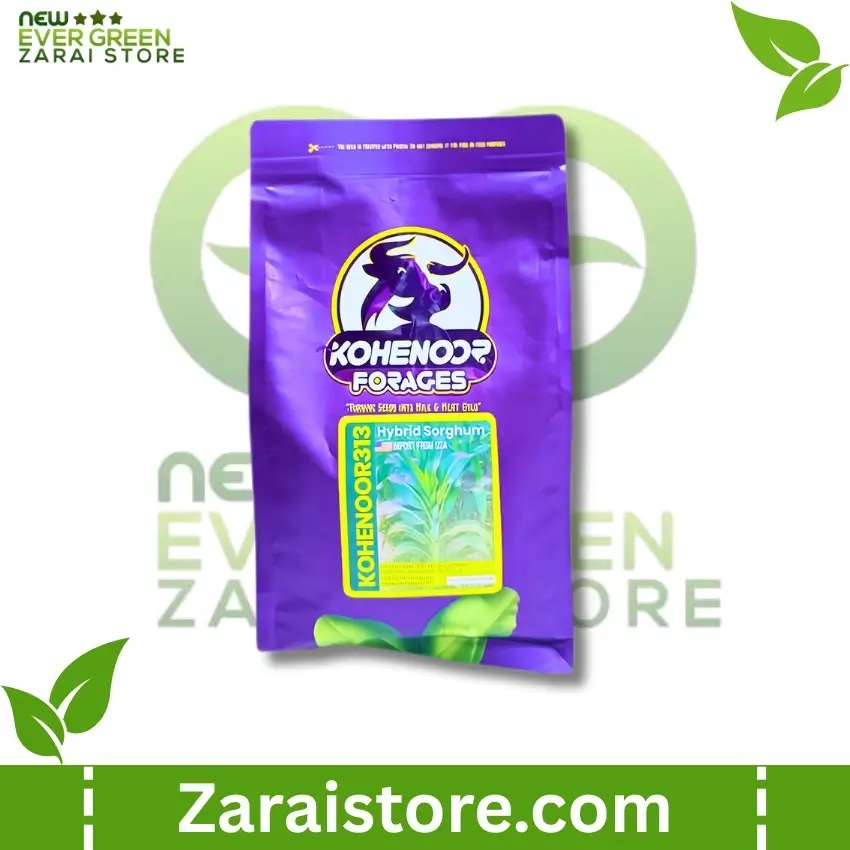
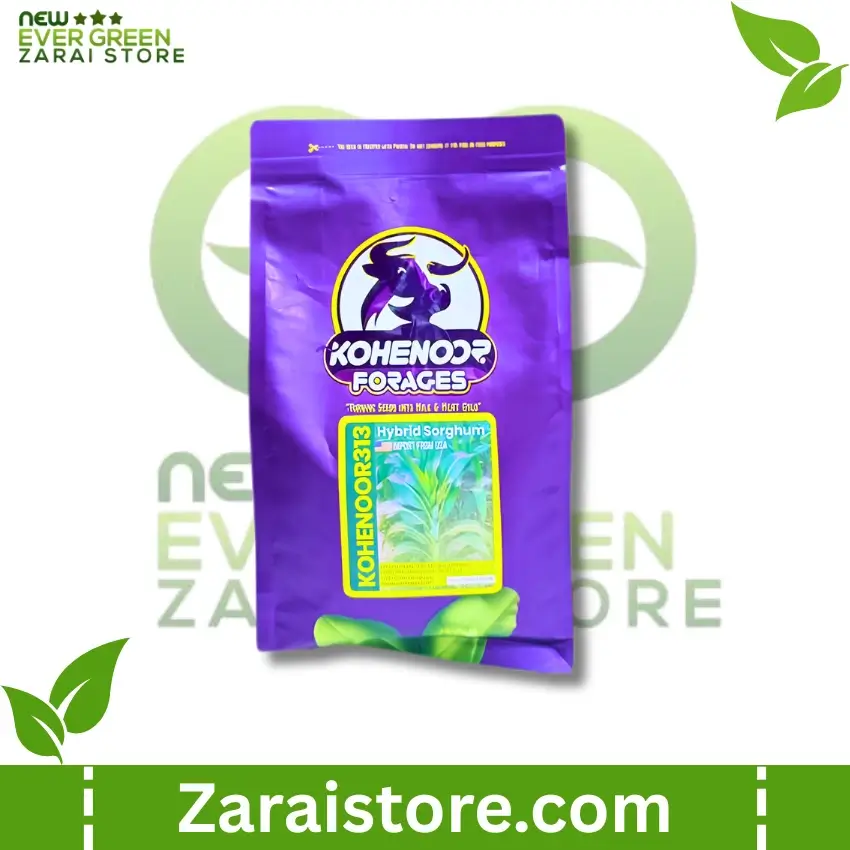
Kohenoor Jawar Seeds BMR 313 1KG Multicut Fodder Sorghum Seeds
Kohenoor Jawar Seeds BMR 313 1KG for Multicut Fodder
Kohenoor Jawar Seeds BMR 313 1KG by Kohe e Noor Forages are developed for fodder cultivation and dairy farming. This multicut Sorghum Sudan Grass seed product is marketed as a Sada Bahar fodder crop for livestock feeding and green fodder production. The recommended seed quantity provided is 1KG for 4 Kanal. Farmers should follow the company's official instructions for sowing, irrigation, cutting intervals and crop management. Available through ZaraiStore Pakistan, subject to stock availability.
Delivery Charges in Pakistan: Free (No Charges)
Delivery Charges in Other Countries: Charges will Apply
Kohenoor Jawar Seeds BMR 313 are fodder sorghum seeds offered by Noorani Seeds (Kohenoor International) for livestock and dairy farming. This variety is marketed for multicut green fodder production and is intended for farmers looking to grow nutritious fodder for their animals.
Sorghum, commonly known as Jawar, is an important warm-season fodder crop in Pakistan. It is valued by livestock farmers because it can produce substantial green biomass under suitable growing conditions. Multicut fodder varieties are cultivated to provide repeated fodder harvests when managed with appropriate irrigation, nutrition and cutting practices.
Kohenoor Jawar Seeds BMR 313 are supplied in a 2kg pack. The recommended seed rate provided is 2kg per acre. Farmers can use this crop as part of their seasonal fodder planning for dairy animals, cattle, buffaloes, goats and other livestock, subject to suitable fodder management.
Product Name: Kohenoor Jawar Seeds BMR 313
Company: Noorani Seeds (Kohenoor International)
Crop Name: Sorghum / Jawar
Variety: BMR 313
Product Type: Multicut Fodder Sorghum Seeds
Pack Size: 2kg
Recommended Seed Rate: 2kg per acre
Crop Purpose: Green Fodder Production
Farming Use: Dairy Farming and Livestock Feeding
Crop Category: Fodder Crop
Sowing Season: Warm Season, according to local climate
Package Type: Seed Packet / Bag, exact packaging to be confirmed
| Specification | Details |
|---|---|
| Product Name | Kohenoor Jawar Seeds BMR 313 |
| Company | Noorani Seeds (Kohenoor International) |
| Crop | Sorghum / Jawar |
| Variety | BMR 313 |
| Crop Type | Fodder Sorghum |
| Fodder Category | Multicut |
| Pack Size | 2kg |
| Seed Rate | 2kg per acre |
| Main Purpose | Green Fodder Production |
| Intended Farming Use | Dairy and Livestock |
| Germination Percentage | To be confirmed from seed label |
| Seed Purity | To be confirmed from seed label |
| First Cutting Time | To be confirmed from company recommendations |
| Subsequent Cutting Interval | To be confirmed from company recommendations |
BMR is commonly used in sorghum variety descriptions for Brown Midrib characteristics. The exact BMR 313 characteristics, nutritional profile, digestibility information and performance specifications should be verified from the official Noorani Seeds (Kohenoor International) product documentation.
Sorghum is a warm-season cereal crop widely cultivated for grain, fodder and silage production. Fodder sorghum is grown mainly for its leaves and stems, which can be harvested and supplied to livestock as green fodder.
Multicut sorghum varieties are managed to allow regrowth after cutting. Their performance depends on variety characteristics, temperature, soil fertility, water availability and proper cutting management.
Kohenoor Jawar BMR 313 is marketed as a multicut fodder sorghum variety. BMR is a designation commonly associated with Brown Midrib sorghum characteristics.
The exact genetic characteristics, plant height, leaf-to-stem ratio, maturity period, nutritional analysis and cutting performance of this specific variety should be confirmed from the company.
Sorghum grows well under warm conditions and requires suitable sunlight, soil moisture and balanced nutrients.
Important growth requirements include:
Warm temperatures for active growth.
Adequate sunlight.
Well-drained soil.
Suitable soil moisture during establishment and regrowth.
Balanced nitrogen, phosphorus, potassium and sulfur nutrition.
Timely weed management.
Proper cutting height to support regrowth.
BMR 313 fodder sorghum variety.
Multicut fodder crop.
Intended for green fodder production.
Suitable crop category for dairy and livestock farming.
Sorghum / Jawar crop.
Warm-season fodder cultivation.
2kg seed pack.
Recommended seed rate of 2kg per acre.
Supplied by Noorani Seeds (Kohenoor International).
Suitable for inclusion in seasonal fodder planning.
Multicut fodder sorghum is cultivated for repeated harvesting under suitable growing conditions. Proper irrigation, nutrient management and cutting practices help support regrowth after each harvest.
Sorghum is commonly used by livestock farmers to produce green fodder. A properly managed crop can contribute to the farm's seasonal fodder supply.
A consistent supply of good-quality fodder is important for dairy farming. Sorghum fodder can be included in a balanced feeding programme for cattle and buffaloes.
The BMR designation is associated with Brown Midrib characteristics in sorghum. Farmers interested in this feature should check the company's official variety information for confirmed nutritional and digestibility specifications.
Sorghum is a warm-season crop that can be cultivated during suitable periods of the year in many agricultural regions of Pakistan.
The 2kg pack provides a convenient quantity for farmers following the supplied seed rate of 2kg per acre.
Green sorghum fodder can be used as part of a balanced ration for livestock. It should be fed according to suitable fodder maturity and safe feeding practices.
Kohenoor Jawar BMR 313 is marketed for fodder cultivation and can be considered by farmers involved in:
Dairy Farming
Cattle Farming
Buffalo Farming
Livestock Farming
Green Fodder Production
Commercial Fodder Cultivation
Farm-Based Animal Feeding
Seasonal Fodder Planning
Potential livestock feeding uses include cattle, buffaloes, goats and sheep. Feeding suitability depends on the crop's maturity, safe harvesting practices and balanced animal nutrition.
Sowing and harvesting schedules for sorghum vary according to temperature, rainfall, irrigation availability and local agricultural conditions. The following is a general regional guide for warm-season fodder sorghum, not a company-issued calendar for BMR 313.
Punjab is one of Pakistan's major agricultural regions, with extensive dairy and livestock farming.
General sowing guidance:
Spring sowing: February to April, depending on local temperatures.
Summer sowing: June to August, depending on rainfall and irrigation.
First cutting: When the crop reaches a suitable fodder stage according to company recommendations.
Subsequent cuttings: According to regrowth, crop health and suitable cutting intervals.
Farmers in Sargodha, Faisalabad, Lahore, Multan, Gujranwala, Sahiwal and surrounding areas should adjust sowing according to local weather and water availability.
Sindh has warm climatic conditions and extensive livestock farming.
General sowing guidance:
Select a suitable sowing period according to local temperatures.
Ensure sufficient irrigation during establishment.
Avoid sowing during unsuitable extreme heat.
Plan cutting according to crop maturity and regrowth.
Maintain suitable moisture after harvesting to support new growth.
Sorghum fodder can be cultivated in suitable warm-season agricultural areas of KPK.
General sowing guidance:
Sow after suitable temperatures are established.
Consider local rainfall and irrigation facilities.
Avoid poorly drained fields.
Harvest according to crop maturity.
Follow local agricultural extension recommendations.
Sorghum cultivation is possible in suitable agricultural areas where water and temperature conditions support crop development.
General sowing guidance:
Select the sowing period according to local climate.
Ensure reliable irrigation during crop establishment.
Use well-drained fields.
Avoid moisture stress during active growth and regrowth.
Follow locally suitable harvesting practices.
Sorghum fodder can be considered for suitable agricultural areas around Islamabad.
General sowing guidance:
Select a warm-season sowing window.
Prepare a suitable seedbed.
Maintain adequate moisture.
Monitor crop growth regularly.
Harvest at a suitable fodder stage.
Good germination is important for establishing a healthy fodder crop. Sorghum seeds require suitable temperature, moisture and soil conditions for successful emergence.
Recommended general practices:
Use clean and healthy seed.
Prepare a fine and level seedbed.
Maintain adequate soil moisture.
Avoid excessive waterlogging.
Sow at a suitable depth according to seed size and soil conditions.
Ensure proper seed distribution.
Avoid planting in excessively dry soil.
Protect the newly established crop from weed competition.
The exact germination percentage and recommended sowing depth for Kohenoor BMR 313 should be confirmed from the official seed label.
Sorghum can grow in different soil types, but good-quality, well-drained soil generally supports better crop establishment and growth.
Suitable soil conditions include:
Fertile loamy soil.
Good drainage.
Adequate organic matter.
Suitable soil moisture.
Balanced soil nutrients.
Appropriate soil pH for sorghum cultivation.
Avoid fields with prolonged waterlogging, severe salinity or poor drainage. Soil testing can help identify nutrient deficiencies before sowing.
Proper land preparation helps establish a uniform fodder crop and improves seed placement.
Recommended practices include:
Plough the field to loosen the soil.
Break large soil clods.
Remove excessive weeds and unwanted plant material.
Level the field for uniform irrigation.
Incorporate well-decomposed farmyard manure where suitable.
Prepare a fine seedbed for uniform sowing.
Ensure proper drainage before planting.
A well-prepared field supports better seed-to-soil contact and uniform crop emergence.
The recommended seed rate supplied for Kohenoor Jawar BMR 313 is 2kg per acre.
General sowing procedure:
Select a suitable field with good drainage.
Prepare a fine and level seedbed.
Check the seed packet for germination and sowing instructions.
Measure 2kg seed for one acre.
Distribute seed uniformly according to the recommended sowing method.
Maintain suitable seed depth.
Cover the seed with a thin layer of soil.
Provide suitable irrigation according to soil moisture conditions.
Monitor the field for uniform emergence.
The exact row spacing, plant spacing and sowing depth should follow the official company recommendations.
Early crop management is important for uniform establishment and healthy plant development.
Recommended practices include:
Monitor germination and crop emergence.
Maintain suitable soil moisture.
Remove weeds during early growth.
Avoid excessive irrigation.
Check the crop for insect damage.
Identify nutrient deficiencies.
Apply fertilizer according to soil testing and crop requirements.
A healthy crop establishment helps develop a stronger fodder stand.
Good crop management supports healthy growth and repeated fodder harvesting.
Important practices include:
Maintain suitable irrigation.
Monitor crop height and growth.
Apply balanced fertilizer according to crop needs.
Control weeds before they compete heavily.
Inspect plants for pests and diseases.
Avoid cutting the crop too early.
Maintain sufficient stubble for regrowth.
Allow suitable recovery time after every cutting.
For multicut varieties, proper cutting management is especially important because repeated harvesting can affect plant recovery and future fodder production.
Sorghum requires suitable soil moisture for germination, establishment, active growth and regrowth after cutting.
Irrigation frequency depends on soil type, weather, rainfall and water availability.
Provide suitable moisture to support seed germination. Avoid excessive irrigation that may cause waterlogging or seed movement.
Maintain adequate soil moisture during early growth. Young plants require suitable moisture for root development and establishment.
Irrigate according to crop requirements and soil conditions. Adequate moisture supports leaf development and green fodder production.
Maintain suitable crop moisture conditions and avoid unnecessary excessive irrigation. Plan harvesting according to crop maturity and field conditions.
Avoid prolonged waterlogging.
Do not allow severe moisture stress.
Adjust irrigation according to soil texture.
Consider rainfall before irrigating.
Maintain suitable drainage.
Provide appropriate moisture after cutting to support regrowth.
Balanced nutrition is important for sorghum growth, green fodder production and repeated harvesting.
Organic matter can improve soil structure, moisture retention and nutrient availability.
Recommended practices include:
Use well-decomposed farmyard manure.
Apply suitable compost where available.
Maintain soil organic matter.
Incorporate suitable crop residues.
Avoid applying undecomposed manure directly with seed.
Nitrogen is important for leaf and stem development in fodder sorghum. Phosphorus supports root development, while potassium contributes to plant water regulation and overall growth.
Recommended general practices:
Conduct soil testing where possible.
Apply a balanced basal fertilizer according to soil requirements.
Use nitrogen according to crop growth and expected harvests.
Consider nutrient replacement after repeated cuttings.
Avoid excessive fertilizer application.
Follow local agricultural recommendations.
Repeated fodder harvesting removes nutrients from the field. Nutrient management should therefore account for the number of cuttings and expected crop production.
Micronutrients such as zinc, iron, boron and manganese are required in small quantities for normal plant growth.
Identify deficiencies before applying micronutrients.
Use soil or plant testing where possible.
Follow crop-specific recommendations.
Avoid unnecessary or excessive application.
Weeds compete with fodder sorghum for sunlight, nutrients, water and growing space. Early weed management helps the crop establish more uniformly.
Prepare a clean seedbed.
Remove weeds before sowing.
Use timely manual or mechanical weeding.
Monitor the field during early growth.
Maintain proper crop establishment.
Prevent weeds from producing mature seeds.
If chemical weed control is necessary, use only registered herbicides approved for sorghum fodder crops and the target weeds.
Always follow the product label for dosage, crop stage, application timing and livestock-related restrictions. Do not use herbicides that are not approved for the intended fodder crop.
For better fodder crop management:
Use the recommended seed rate.
Ensure uniform sowing.
Maintain adequate moisture.
Apply balanced nutrients.
Control weeds during early growth.
Monitor pests and diseases.
Harvest at the recommended fodder stage.
Leave suitable stubble for regrowth.
Provide suitable irrigation and nutrition after cutting.
Fodder production can be influenced by:
Seed quality and germination.
Sowing time.
Soil fertility.
Temperature.
Sunlight.
Water availability.
Fertilizer management.
Weed competition.
Pest and disease pressure.
Cutting height.
Cutting intervals.
Crop recovery after harvesting.
The actual production and number of cuttings for BMR 313 depend on its official variety characteristics and local field conditions.
Sorghum crops may be affected by insects and diseases. Regular field inspection helps identify problems before they become severe.
Depending on the location and season, farmers should monitor:
Shoot fly.
Stem borers.
Aphids.
Armyworms.
Grasshoppers.
Other leaf-feeding insects.
Correct identification is important before selecting a control method.
Possible sorghum crop problems include:
Anthracnose.
Leaf blight.
Rust.
Grain mould in grain-producing crops.
Root and stem rots.
Seedling diseases.
Nutrient deficiency symptoms.
Disease occurrence depends on variety, weather, crop stage and field conditions.
Use healthy and quality seed.
Prepare a well-drained field.
Maintain suitable plant population.
Remove heavily infected plant material where appropriate.
Avoid unnecessary waterlogging.
Monitor the crop regularly.
Follow local agricultural recommendations.
Use registered crop protection products only when required. Select products approved for sorghum and follow all label instructions.
For fodder crops, pay special attention to grazing restrictions, livestock safety and any required waiting period before feeding treated plants to animals.
Multicut sorghum is cultivated for repeated green fodder harvesting. The correct cutting stage depends on the variety, crop maturity, weather and livestock feeding requirements.
Harvest the crop at the suitable fodder stage recommended by the seed company. Do not rely on a fixed number of days without confirming the specific BMR 313 maturity and cutting recommendations.
For sorghum fodder, harvesting at an appropriate stage helps balance green fodder quantity and quality.
Follow the recommended first-cutting stage.
Avoid harvesting too early.
Use clean and sharp cutting tools.
Leave suitable stubble for regrowth.
Avoid cutting too close to the soil.
Allow the crop to recover before the next cutting.
Maintain suitable moisture and nutrient supply after harvesting.
An important safety consideration with sorghum is the potential presence of prussic acid (hydrocyanic acid) and nitrate accumulation under certain growing conditions. Young, drought-stressed, frost-damaged or heavily nitrogen-fertilized sorghum may present livestock feeding risks. Follow local livestock feeding guidance and allow appropriate recovery or testing where necessary.
Proper handling helps maintain fodder quality after harvesting.
Remove unwanted weeds, soil and foreign material from harvested fodder.
Separate excessively mature, damaged or unsuitable plant material from healthy fodder.
For fresh fodder, use suitable transportation and handling methods to reduce unnecessary damage and heating.
For silage production, use an appropriate chopping, moisture management, compaction and airtight storage process.
Kohenoor Jawar BMR 313 can be considered by commercial dairy farms and livestock owners planning their green fodder production.
Recommended practices include:
Plan sowing according to seasonal fodder requirements.
Calculate seed quantity according to cultivated acreage.
Prepare the field properly.
Maintain a suitable fertilizer programme.
Ensure reliable irrigation.
Monitor weeds, pests and diseases.
Plan cutting and transportation.
Maintain fodder records.
Follow safe livestock feeding practices.
The recommended seed rate supplied for Kohenoor Jawar BMR 313 is:
1 Acre: 2kg
2 Acres: 4kg
½ Acre: 1kg
¼ Acre: 500g
These quantities are proportional calculations based on the supplied rate of 2kg per acre. Follow the official company instructions if they specify a different rate for a particular sowing method or field condition.
Commercial fodder farmers should consider:
Local dairy farm demand.
Livestock population.
Seasonal fodder shortages.
Irrigation costs.
Fertilizer and labour expenses.
Cutting and transportation costs.
Fresh fodder selling prices.
Silage production opportunities.
Planning the crop according to local demand can help farmers manage fodder availability and harvesting schedules.
Keep the seed in its original packaging.
Store in a cool and dry place.
Protect from direct sunlight.
Keep away from moisture.
Avoid contact with chemicals and fertilizers.
Keep the packet sealed when not in use.
Protect seed from rodents and insects.
Follow the storage instructions printed on the seed packet.
Fresh sorghum fodder should be handled carefully and fed according to suitable livestock nutrition practices.
For longer storage, sorghum fodder may be used for silage where the crop maturity, moisture level and preservation process are suitable.
Chop fodder to a suitable size.
Manage moisture according to silage requirements.
Compact the material properly.
Seal the storage structure to prevent air entry.
Monitor the stored silage for spoilage.
Do not feed mouldy, spoiled or improperly preserved fodder to livestock.
Read the official seed packet instructions before sowing.
Store seed away from children and animals.
Wear suitable protective equipment during seed handling.
Avoid inhaling seed dust.
Do not use seed for human consumption.
Follow recommended sowing depth and seed rate.
Avoid excessive nitrogen fertilizer application.
Monitor sorghum for potential prussic acid and nitrate risks.
Take special care with young, drought-stressed or frost-affected sorghum.
Follow suitable livestock feeding guidance before feeding harvested fodder.
Keep seed packaging for product identification and reference.
ZaraiStore provides agricultural products for farmers, livestock owners, dairy farms and agricultural businesses across Pakistan.
We aim to provide clear product details, including company information, variety, pack size and recommended seed rate wherever available.
Products are handled and packed carefully to help protect them during order processing and delivery.
Farmers can explore agricultural seeds, fertilizers, pesticides, fodder products and other farming essentials through ZaraiStore.
ZaraiStore provides ordering convenience for customers in Sargodha and other cities of Pakistan, subject to delivery service availability.
Our aim is to help farmers access agricultural products and useful product information for their farming requirements.
1. What is Kohenoor Jawar Seeds BMR 313?
Kohenoor Jawar Seeds BMR 313 are fodder sorghum seeds marketed for multicut green fodder production and livestock farming.
2. Which company supplies Kohenoor BMR 313 Jawar Seeds?
The company provided for this product is Noorani Seeds (Kohenoor International).
3. What is the pack size of Kohenoor Jawar Seeds BMR 313?
The pack size is 2kg.
4. What is the recommended seed rate for BMR 313?
The supplied seed rate is 2kg per acre.
5. Which crop is BMR 313?
BMR 313 is marketed as a fodder sorghum or Jawar variety.
6. Is Kohenoor BMR 313 a multicut fodder variety?
Yes, the product is marketed as a multicut fodder sorghum variety. Follow the company's recommendations for cutting intervals and regrowth management.
7. What is BMR in sorghum?
BMR commonly stands for Brown Midrib, a designation associated with particular sorghum characteristics. Confirm the exact BMR 313 specifications with Noorani Seeds (Kohenoor International).
8. Is BMR 313 suitable for dairy farming?
It is marketed for fodder production and dairy farming. Its actual feeding suitability depends on crop maturity, nutritional quality and safe fodder management.
9. Can Jawar BMR 313 be used for cattle and buffaloes?
Sorghum fodder is commonly used in cattle and buffalo feeding programmes. Feed it at a suitable stage and follow livestock nutrition guidance.
10. What is the best season for sowing sorghum fodder?
Sorghum is a warm-season crop. Suitable sowing periods vary by region, temperature and irrigation availability.
11. How should the field be prepared before sowing?
Prepare a fine, level and well-drained seedbed. Remove excessive weeds and ensure suitable soil moisture before sowing.
12. How much seed is required for half an acre?
Based on the supplied rate of 2kg per acre, approximately 1kg seed is required for half an acre.
13. How many cuttings can BMR 313 produce?
The exact number of cuttings depends on the variety's official specifications, weather, irrigation, fertility and cutting management. Confirm the expected cutting performance with the company.
14. Can sorghum fodder be used for silage?
Sorghum is commonly used for silage production when harvested and preserved at a suitable maturity and moisture level. Follow proper silage preparation and storage practices.
15. Where can I buy Kohenoor Jawar Seeds BMR 313 2KG in Pakistan?
You can contact ZaraiStore to enquire about Kohenoor Jawar Seeds BMR 313 2KG by Noorani Seeds (Kohenoor International), subject to stock availability.
Farmers interested in fodder production and livestock nutrition can also explore:
Multicut Sorghum Seeds
Sudan Grass Seeds
Fodder Maize Seeds
Millet Fodder Seeds
Barseem Seeds
Lucerne / Alfalfa Seeds
Oat Fodder Seeds
Rhodes Grass Seeds
Other Dairy Fodder Seeds
Choose fodder varieties according to local climate, livestock requirements, water availability and seasonal cultivation plans.
Buy Kohenoor Jawar Seeds BMR 313 2KG by Noorani Seeds (Kohenoor International) from ZaraiStore for your fodder cultivation and dairy farming needs.
Product: Kohenoor Jawar Seeds BMR 313
Company: Noorani Seeds (Kohenoor International)
Pack Size: 2KG
Crop: Sorghum / Jawar
Fodder Type: Multicut Fodder
Recommended Seed Rate: 2KG per acre
Website: zaraistore.com
WhatsApp: 0307-6000498
Address: Grain Market, Shop No. 96, Sargodha, Pakistan.
Order online from ZaraiStore for convenient access to agricultural seeds and farming products across Pakistan.
| Product code | SKU: 334 |
|---|---|
| Weight | 1Kg |
| Packing | Packet |
 Kohenoor Jawar Seeds BMR 313 1KG Multicut Fodder Sorghum Seeds
Join our exclusive subscriber community and unlock special discounts. Don't miss out on the savings - subscribe today!
Experience our lightning-fast delivery service within 3 to 7 days.
Customer satisfaction is our priority. If you're not satisfied return it within 7 days.
Support team is here for you 24/7. Whether you have a question or require any support.
Your transactions are safe and secure with us. We offer trusted and encrypted payment options.
Enjoy Free & Fast Delivery All Pakistan 45 Days Free Returns